Overview
In today’s digital-first world, our eyes are constantly under pressure — from long hours on screens, pollution, poor diet, and stressful lifestyles. As a result, eye problems like dryness, redness, and weak vision are no longer limited to old age; they’re now common among students, professionals, and even children.
While modern eye care provides quick solutions, many people are turning to Ayurvedic eye treatment for a more holistic and long-term approach. Ayurveda doesn’t just focus on symptoms; it addresses the root causes through diet, lifestyle, herbs, and therapeutic practices.
In this blog, we’ll explore effective Ayurvedic remedies for common eye problems and share actionable tips you can adopt today to protect and improve your vision naturally.
Understanding Eye Problems in Ayurveda
The Ayurvedic View of Eye Health
In Ayurveda, the eyes are considered a window of Pitta dosha, specifically governed by Alochaka Pitta, which supports vision. When imbalances occur due to poor diet, stress, pollution, or excessive screen time, eye-related problems surface.
- Dryness → Often linked to Vata imbalance
- Redness / Burning Sensation → Caused by Pitta aggravation
- Weak or Blurred Vision → Linked to Kapha imbalance or prolonged strain
Ayurveda explains that balancing these doshas through herbs, nutrition, therapies, and lifestyle practices can restore clarity, comfort, and strength to the eyes.
Why It Matters Today
- Digital eye strain is rising rapidly due to screen use.
- Pollution and allergies cause irritation and redness.
- Nutritional deficiencies lead to weak vision at an early age.
Ayurvedic remedies offer natural solutions that are preventive, restorative, and free from long-term side effects.
Common Eye Problems & Challenges
1. Eye Dryness
- Caused by excessive screen time, dehydration, or air-conditioned environments.
- Common mistake: Using artificial tears without addressing hydration or lifestyle causes.
2. Eye Redness
- Triggers: Dust, pollution, allergies, excess heat, and lack of sleep.
- Misconception: Redness is always “infection” — in many cases, it’s an imbalance of Pitta or lifestyle-related.
3. Weak Vision
- Factors: Lack of proper nutrition, genetic predisposition, and strain from prolonged gadget use.
- Challenge: People rely only on spectacles instead of addressing root causes with diet and exercises.
Ayurvedic Remedies & Best Practices
Herbal Remedies for Eye Health
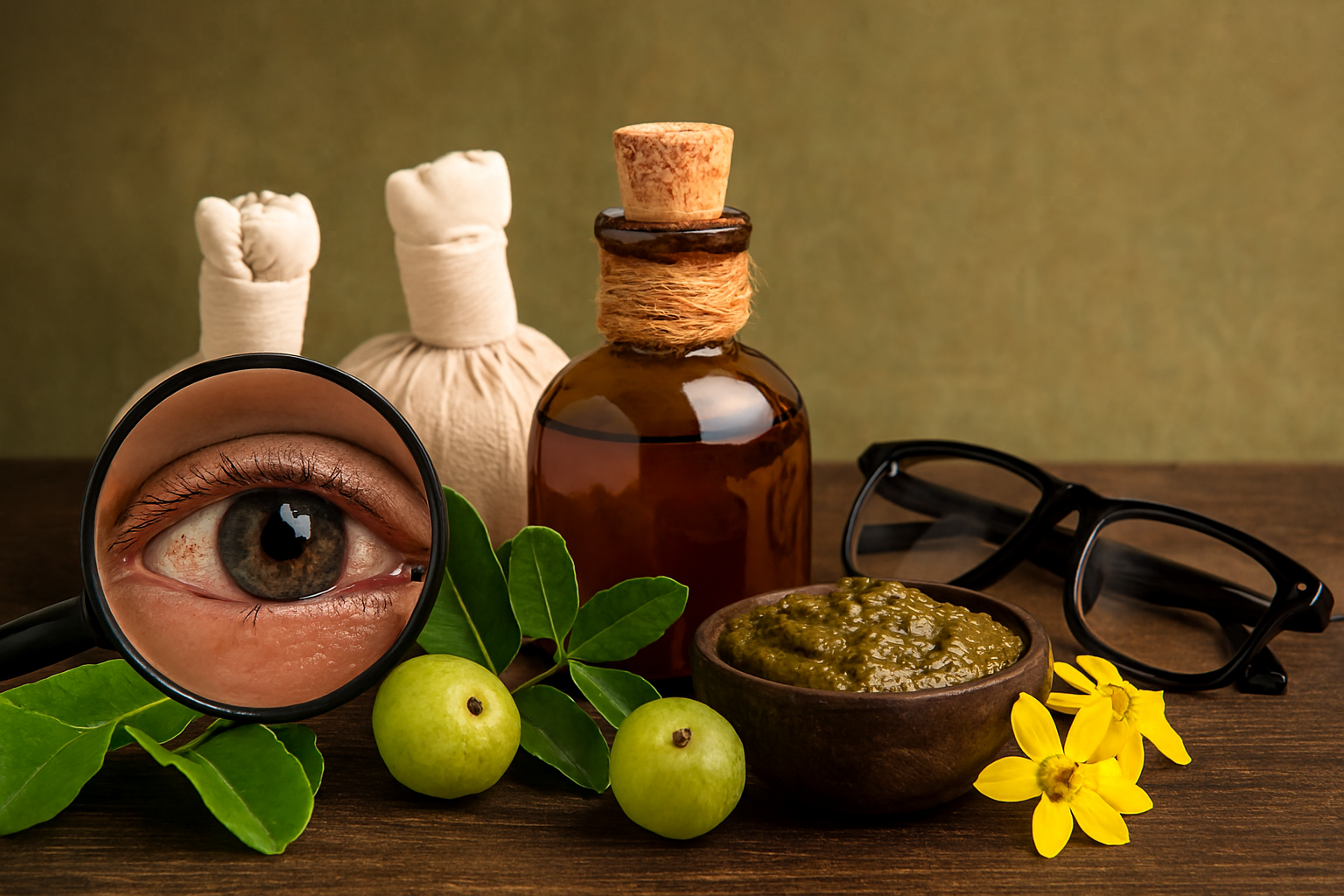
- Triphala: Known as the “eye tonic” in Ayurveda, taken as powder or infused water for strengthening vision.
- Amla (Indian Gooseberry): Rich in Vitamin C, helps reduce oxidative stress in eye tissues.
- Castor Oil Drops (under supervision): Helps lubricate eyes and reduce dryness.
- Neem & Tulsi: Cooling and anti-inflammatory, useful for redness and irritation.
Home Remedies for Eyesight
- Wash eyes with Triphala water (soaked overnight, strained, and cooled).
- Use rose water drops (pure, natural) for cooling and soothing redness.
- Eat carrots, spinach, and almonds daily for Vitamin A and antioxidants.
Eye Exercises to Improve Vision
- Palming: Rub palms together and place over eyes to relax them.
- Trataka (candle gazing): Improves focus and strengthens eye muscles.
- Blinking exercises: Reduces dryness and refreshes the eyes.
- Eye rotations (clockwise/anticlockwise): Enhance flexibility and circulation.
Yoga & Pranayama for Better Eyesight
- Anulom Vilom (Alternate Nostril Breathing): Balances doshas, reduces stress affecting vision.
- Bhramari (Bee Breathing): Calms the nervous system and relieves strain.
- Shavasana with closed-eye rest: Gives eyes deep relaxation.
Lifestyle & Diet Tips
- Hydration: Drink plenty of water to avoid dryness.
- Balanced diet: Include ghee, leafy greens, nuts, and seasonal fruits.
- Daily routine: Follow an Ayurvedic lifestyle — regular sleep, avoiding late-night screen exposure.
- Oil massage (Abhyanga): Applying warm sesame oil around the eyes can improve blood flow.
Advanced Insights & Future Outlook
The future of eye health combines ancient Ayurveda with modern research. For example:
- Studies on Triphala show antioxidant properties that protect against oxidative damage in eye tissues.
- AI-powered eye strain detection tools may soon guide people to adopt Ayurvedic relaxation techniques in real time.
- Preventive eye care is gaining global recognition, and Ayurveda is expected to play a bigger role in integrative eye health care.
As screen usage rises worldwide, Ayurveda offers a sustainable model of holistic vision care that complements modern ophthalmology.
Practical Example
Take the case of Ramesh, a 35-year-old IT professional who suffered from constant eye redness and blurred vision. Instead of relying only on eye drops, he adopted simple Ayurvedic remedies:
- Daily Triphala wash
- 15 minutes of Anulom Vilom pranayama
- Almonds and ghee in his diet
Within 2 months, his symptoms improved significantly, and his dependency on artificial drops reduced.
This illustrates how Ayurveda, when practiced consistently, can deliver long-lasting results.
Conclusion
Eye problems like dryness, redness, and weak vision are no longer rare — they are a daily struggle in the modern digital lifestyle. Ayurvedic eye treatment provides not just symptom relief but also long-term eye wellness through natural remedies, herbs, yoga, diet, and lifestyle changes.
By adopting even a few practices — like Triphala, yoga for better eyesight, and Ayurvedic diet tips — you can protect your vision for years to come.
✨ Your eyes deserve holistic care. Start small, stay consistent, and let Ayurveda bring clarity back to your vision.
FAQs
1. What is the best Ayurvedic treatment for dry eyes?
Triphala water wash, castor oil eye drops (supervised), and hydration are effective Ayurvedic remedies for dry eyes.
2. Can Ayurveda improve weak vision naturally?
Yes, with herbs like Amla and Triphala, a nutrient-rich diet, and eye exercises such as Trataka and Palming, weak vision can be strengthened naturally.
3. How does yoga help in eye health?
Yoga improves circulation, reduces strain, and strengthens eye muscles. Practices like Anulom Vilom and Trataka are especially beneficial.
4. Which foods in Ayurveda are good for eyesight?
Carrots, spinach, almonds, walnuts, Amla, and ghee are excellent Ayurvedic foods for eye health.
5. Is Ayurvedic eye treatment safe for children?
Yes, gentle remedies like Amla, balanced diet, and simple eye exercises are safe for children when guided properly.
6. Can Ayurveda prevent age-related vision problems?
Ayurveda emphasizes prevention through herbs, diet, and lifestyle. Regular use of Triphala and a healthy routine can delay age-related issues like cataract and weak vision.